
History
The Southeast Asian Games owes its origins to the South East Asian Peninsular Games. On 22 May 1958, delegates from the countries in Southeast Asian Peninsula attending the Asian Games in Tokyo had a meeting and agreed to establish a sports organization. The SEAP Games was conceptualized by Luang Sukhum Nayaoradit, then Vice-President of the Thailand Olympic Committee. The proposed rationale was that a regional sports event will help promote cooperation, understanding, and relations among countries in the Southeast Asian region.
Six countries, Burma (now Myanmar), Kampuchea (now Cambodia), Laos, Malaya (now Malaysia), Thailand and the Republic of Vietnam (South Vietnam) were the founding members.
The inaugural SEAP Games were held in Bangkok from 12–17 December 1959, with more than 527 athletes from 6 countries; Burma (now Myanmar), Laos, Malaya, Singapore, South Vietnam and Thailand participated in 12 sports.
At the 8th SEAP Games in 1975, the SEAP Federation considered the inclusion of Brunei, Indonesia, and the Philippines. These countries were formally admitted in 1977, the same year when SEAP Federation changed its name to the Southeast Asian Games Federation (SEAGF), and the games were known as the Southeast Asian Games. Despite its location closer to the Pacific archipelago than the Asian continent and not being a member of ASEAN, East Timor was admitted at the 22nd Southeast Asian Games in 2003 Hanoi–Ho Chi Minh City.
The 2009 Southeast Asian Games was the first time Laos has ever hosted a Southeast Asian Games (Laos had previously declined to host the 1965 Southeast Asian Peninsular Games citing financial difficulties). Running from 9–18 December, it has also commemorated the 50 years of the Southeast Asian Games held in Vientiane, Laos. (Summarized from Wikipedia)
PARTICIPATION & BEST RESULTS
Myanmar (MYA) All 32 editions (as Burma until 1987) / 20-12-10 in 1969
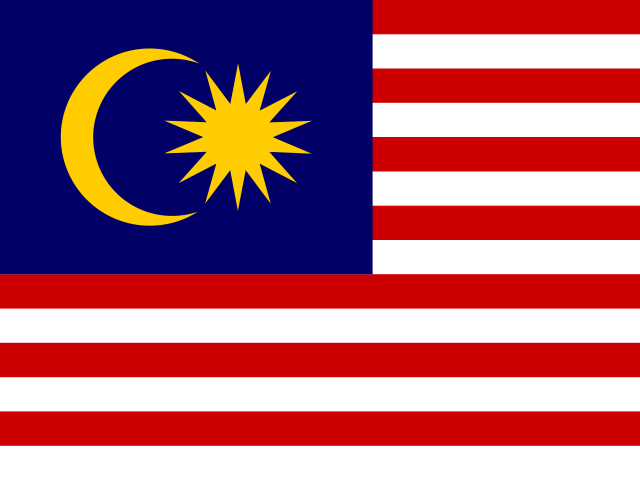
Malaysia (MAS) All 32 editions / 18-14-9 in 1965
Thailand (THA) All 32 editions / 22-8-11 in 2001
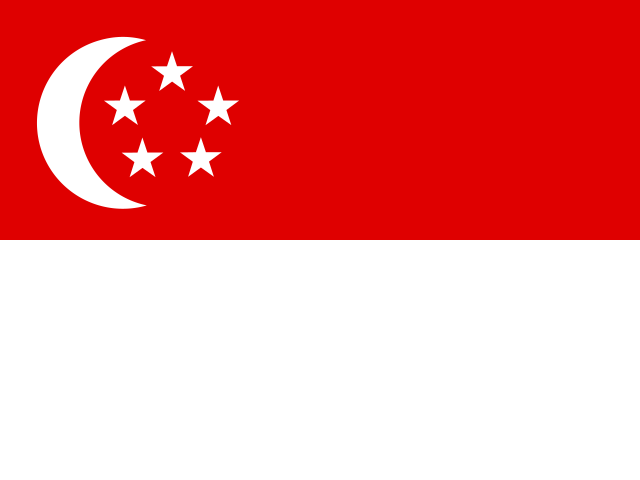
Singapore (SIN) All 32 editions / 6-16-7 in 1973
Vietnam (VIE) 25 (1959-73 as South Vietnam, 1989-23) / 20-11-7 in 2022
Laos (LAO) 23 (1959-73, 1989-23) / 0-0-2 in 1995 and 2013
Philippines (PHI) 23 (1977-23) / 11-11-10 in 1983
Indonesia (INA) 23 (1977-23) / 17-13-19 in 1987
Brunei (BRU) 23 (1977-23) / 0-1-3 in 1999
Cambodia (CAM) 18 (1961-63, 1971-73, 1983-87, 1995-23) / 7-3-3 in 1971
Timor-Leste (TLS) 10 (2003-23) / 0-2-0 in 2022
MOST SUCCESSFUL ATHLETES AT THE EVENT
15-8-3 Elma Muros (PHI)
15-4-0 Jennifer Tin Lay (MYA)
13-5-1 Anat Ratanapol (THA)
13-4-5 Wassana Winatho (THA)
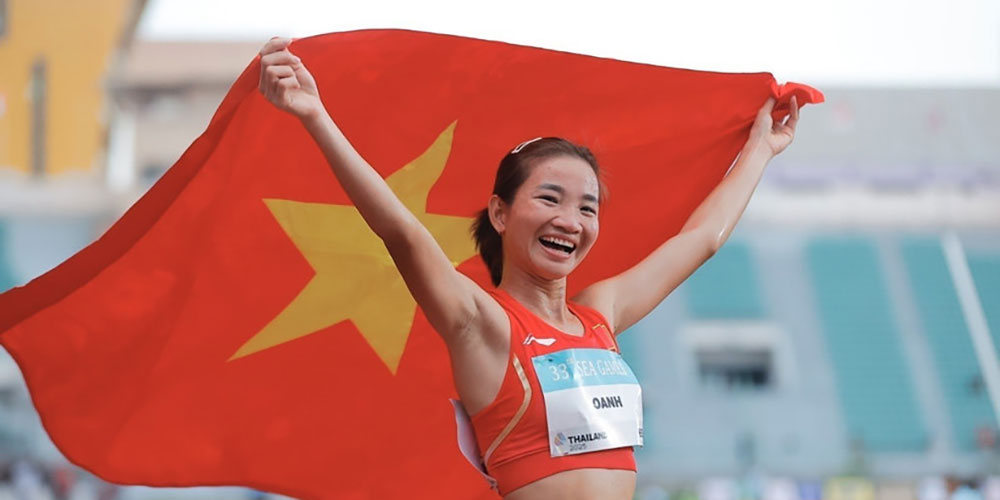
13-1-0 Thi Oanh Nguyen (VIE)
12-6-0 Than Than Lwin (MYA)
12-3-0 Jimmy Crampton (MYA)
12-2-0 Suchart Chairsuvaparb (THA)
12-2-1 Thi Huyen Nguyen (VIE)
11-1-1 Triyaningsih (INA)
10-4-2 James Wong (SIN)
10-3-1 Sumet Promna (THA)
10-2-1 Khin Khin Htwe (MYA)
10-0-0 Reanchai Seeharwong (THA)
OLDEST ACTIVE CHAMPIONSHIP RECORDS
Men's 800m: Samson Vellabouy (MAS), 1:48.29 in Kuala Lumpur 1989
Women's 100m: Lydia de Vega (PHI), 11.28 in Jakarta 1987
MOST CONSECUTIVE TITLES
9 Jennifer Tin Lay (MYA) in SP (1967, 1969, 1971, 1973, 1975, 1977, 1979, 1981, 1983)
7 James Wong (SIN) in DT (1993, 1995, 1997, 1999, 2001, 2003, 2005)
7 Subenrat Insaeng (THA) in DT (2011, 2013, 2015, 2017, 2019, 2021, 2023)
6 Triyaningsih (INA) in 10,000m (2007, 2009, 2011, 2013, 2015, 2017)
6 Zhang Guirong (SIN) in SP (2005, 2007, 2009, 2011, 2013, 2015)
6 Elma Muros (PHI) in LJ (1989, 1991, 1993, 1995, 1997, 1999)
6 Jennifer Tin Lay (MYA) in DT (1973, 1975, 1977, 1979, 1981, 1983)
6 Jimmy Crampton (MYA) in 1500m (1969, 1971, 1973, 1975, 1977, 1979)
6 Nashatar Singh Sidhu (MAS) in JT (1965, 1967, 1969, 1971, 1973, 1975)
6 Nur Herman Majid (MAS) in 110H (1991, 1993, 1995, 1997, 1999, 2001)
6 Eric Cray (PHI) in 400H (2013, 2015, 2017, 2019, 2021, 2023)
6 Mohammed Irfan Shamshuddin (MAS) in DT (2013, 2015, 2017, 2019, 2021, 2023)
+
Stats updated after 2023 event / Contributor of this section: Emmanuel Glagentas (FRA)



 East Timor