By Yavuz YAVUZ
Glasgow’s Commonwealth Arena hosted another major track and field five years after it welcomed the European Athletics Indoor Championships, and this time it was the World Indoors that reached northern hemisphere’s winter athletics season to its climax. As two world records were broken by their incumbent holders in the three-day meet, several nations enjoyed their best showing to date in the history of the event.
CHARLTON AND BOL IMPROVE THEIR RECORDS
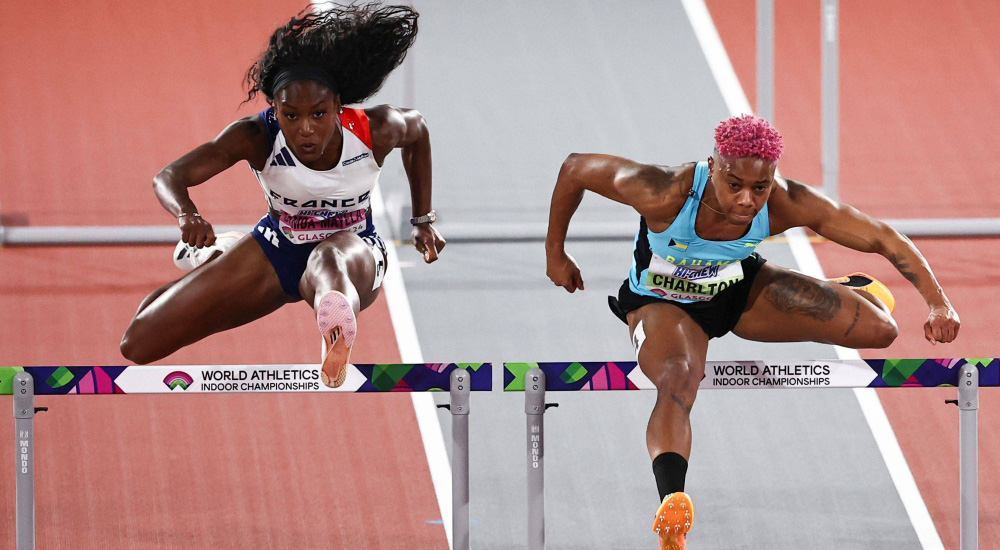
Devynne Charlton of Bahamas arrived in Glasgow deadlocked with Tia Jones in the world record mark of 7.67. Injury kept Jones out of competition, which gave Charlton more room to excel, although there were still significant challengers including Cyréna Samba-Mayela, the defending champion. As she cruised to her inaugural global title, she managed to become the sole holder of the world record with an astonishing run of 7.65.
Femke Bol managed to brush 0.07 seconds off of the 400m world record that she set earlier in February as she won the gold medal with 49.17. In the race, she was followed by her Dutch teammate Lieke Klaver, who enjoyed the first global individual medal of her career with a silver in 50.16 seconds.
In the meantime, American athletes set several championship records. Elinor Purrier St. Pierre clocked 8:20.87 – third in all-time list – as she became the first U.S. athlete to win a world indoors gold in women’s 3000m. While doing so, she managed to leave behind race favourites Gudaf Tsegay and Beatrice Chepkoech.
As Ryan Crouser won his first world indoors title, his 22.77 was a 24-centimetre improvement of the previous championship record. In the meantime, Grant Holloway defended his men’s 60m hurdles title by repeating the championship record of 7.90.
NEWCOMERS GRACE THE EVENT
There were also four nations that won their maiden world indoors medals, and three of them achieved that by standing on the top step of the podium. Dominica’s Thea LaFond lived up to the promise of her performance this season and became the new women’s triple jump champion in the absence of Yulimar Rojas – three-time defending champion – and Maryna Bekh-Romanchuk with a leap of 15.01 metres. She edged Cuba’s world bronze medallist Leyanis Perez for the title.
In women’s 60 metres race, Julien Alfred edged Eva Swoboda and Zaynab Dosso, the main European contenders for the title, by clocking 6.98 and won St. Lucia’s first ever world indoors medal, as well as her very own first global title.
Burkina Faso’s first world indoors medal came with the leap of Hugues Fabrice Zango in men’s triple jump, who won the title by landing at 17.53 metres. Furthermore, Benin’s Noelie Yaringo, a former West African Champion, won her country’s first world indoors medal with a bronze in women’s 800m.
STANDOUT PERFORMANCES
Yasser Triki won silver medal in men’s triple jump and became Algeria’s first world indoors medallist since Noureddine Morceli won gold at men’s 1500m in 1991. Furthermore, Triki’s silver was the first Algerian medal in a field event since Othmane Belfaa won high jump bronze at the inaugural championship nearly four decades ago in 1985.
Italy’s long jump prodigy Mattia Furlani earned the first major accolade of his career with a silver in men’s long jump, as he leapt to 8.22 – the same distance as the gold-medallist Miltiadis Tentoglou, but the Greek Olympic champion’s second-best mark was better.
Heptathlon witnessed a tight race, as Bahamas’ Ken Mullings arrived the last two events in first place, but dropped to fourth in the end, which kept him from the quest of winning the country’s first ever senior medal in combined events. Simon Ehammer, silver medallist in Belgrade, won gold 6418 points – a Swiss record. Silver medallist Sander Skotheim of Norway also broke a national record with 6407 points. Johannes Erm came in third and won Estonia’s fourth medal in the championships’ history, all in heptathlon.
NEW ZEALAND AND BELGIUM CONCLUDE HISTORIC EVENT
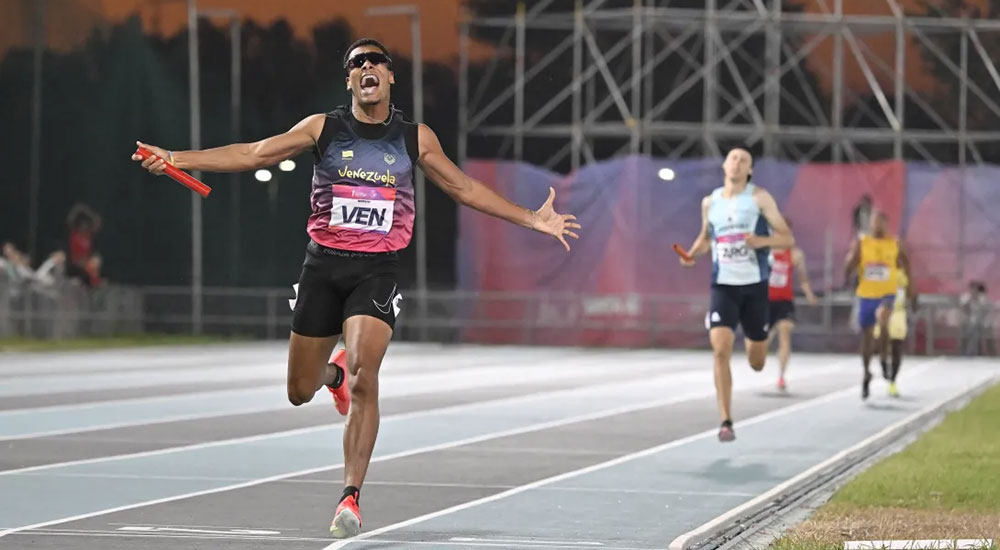
Belgium recorded its best ever medal table standing by being placed second with four medals, three of which are gold. Alexander Doom “The Boom” contributed to two of the gold medals, by winning the men’s 400m final and running the anchor leg for the Belgians in the men’s 4x400m final. Noor Vidts, furthermore, defended her pentathlon title.
New Zealand finished third on the medal table with four medals (two golds and two silvers) and enjoyed its best ever showing as well. As Geordie Beamish and Hamish Kerr won gold medals in men’s 1500m and high jump, respectively, Eliza McCartney won the country’s first ever pole vault medal in the event history with a silver.