By Yavuz Yavuz
2024 marks the 50th anniversary of the last time Rome’s Stadio Olimpico welcomed the greatest track and field athletes of Europe. 1974 European Championships was also significant as it was the return of major international athletics to Stadio Olimpico after the 1960 Summer Olympics in Rome. Dominated by the German Democratic Republic (GDR) and the Soviet Union (USSR), the 11th edition of the championships and the event’s first visit to Rome produced numerous moments that are engraved in history books, while at the same time signalling the arrival of new faces on the international scene. Before we witness several more of those iconic moments, here is a retrospect of the events that made the 1974 edition of the championships unforgettable.
ITALY’S OWN: MENNEA AND SIMEONI
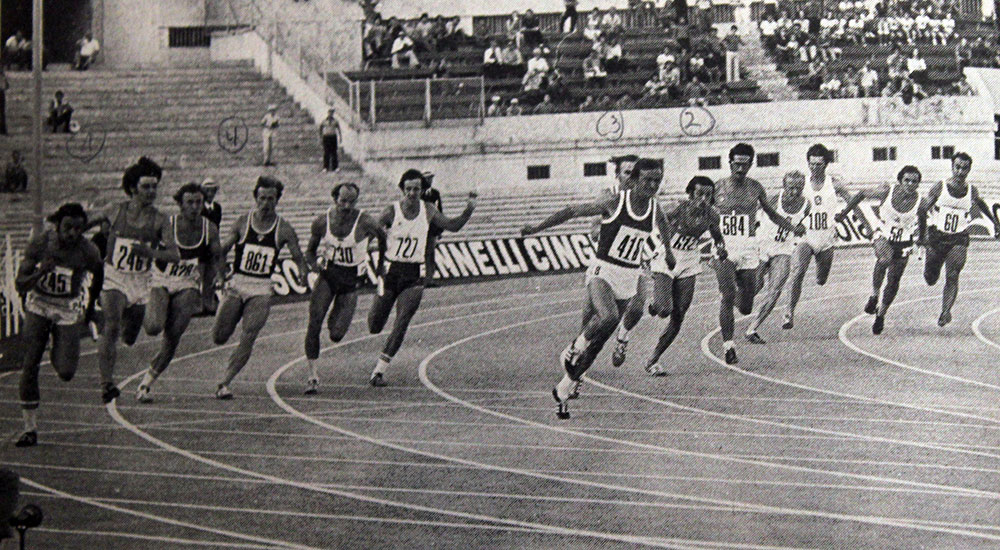
Among the athletes that put a smile on the home crowd’s face, Italy’s sprint legend Pietro Mennea stood out as he stepped on three podiums during the 1974 European Championships. While he gave imprints of what would turn into phenomenal sprint career with an Olympic bronze in 200m two years earlier, Rome 1974 was the first time he was crowned in his country. While he was outrun by Valeriy Borzov, the Soviet Olympic champion, in the men’s 100m final, he became the gold medallist in 200m 14 years after his compatriot Livio Berruti raised the roof of Stadio Olimpico in the Olympic final of the same event. Mennea also helped Italy achieve its best ever 4x100 relay result in the event history to that date, as the team ran a national record of 38.88 seconds.
High jumper Sara Simeoni followed a similar track as Mennea, since she had also shined at the 1971 Mediterranean Games in İzmir and the 1973 Universiade in Moscow, where she respectively won silver and bronze medals. Ringing the sound bell of her arrival in the international scene, Simeoni jumped to a national record of 1.89 metres for a bronze medal at the women’s high jump final of the 1974 European Championships. With this result, Simeoni became the first Italian women’s high jump medallist in the European Champinships. She won the European title four years later, which would stand as Italy’s only title in the event until Gianmarco Tamberi captured the gold medal 38 years later. The Verona native would also go on to win an Olympic medal two years later, and a gold one in 1980 alongside Mennea who was crowned in the men’s 200m final in Moscow as well.
In the meantime, while Guiseppe Cindolo won bronze in men’s 10.000 metres, 17-year-old Gabriella Dorio – who would be an Olympic gold medallist in Los Angeles a decade later – ran in the final of women’s 1500m and finished ninth.
POLISH DOUBLE BILL
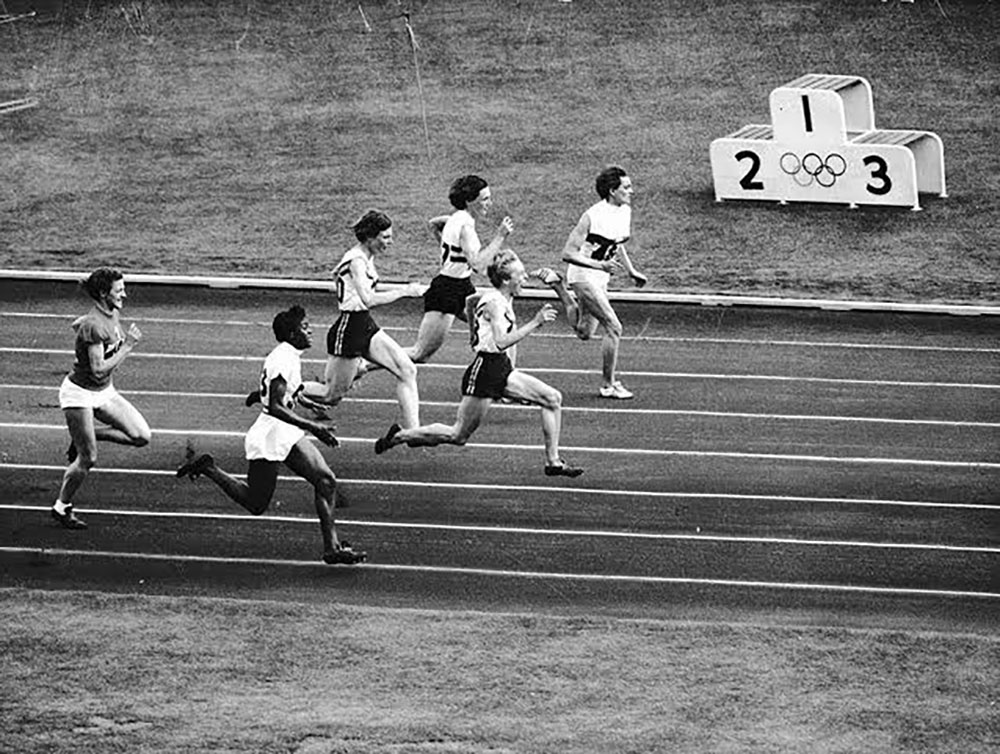
Irena Kirszenstein-Szewinska of Poland was the star of 1966 European Championships in Budapest, when she won four medals (in 100m, 200m, 4x100m and long jump), and stood on top of the podium three times (she was only surpassed by her compatriot Ewa Klobukowska in 100m), having set championship records in each of them.
Eight years later, she returned to top form with double gold medal in 100m and 200m finals, as she outran Olympic champion and world record holder Renate Stecher of the GDR in each of them. Her respective marks of 11.13 and 22.51 were both championship records at the time. Szewinska also ran the relays for Poland and helped her country on another podium with a 4x100 bronze, whereas they finished fourth in the 4x400 final.
While Ryszard Skowronek also won a gold medal in decathlon, the fourth European title for the Poles came from Bronislaw Malinowski in men’s 3000m steeplechase. As Malinowski fended off Anders Garderud, who would be an Olympic champion in two years’ time, he lowered the championship record the Swede set during the heats with 8:23.6 by more than eight seconds in the final where he ran 8:15.0.
WORLD RECORDS GALORE
Championship records were set in more than 30 events at Rome 1974, and world records were renewed in four women’s events. Finland’s Riitta Salin was the only non-GDR athlete to set a world record in the event, as she clocked a staggering 50.14 to clinch the 400m title. This was the fastest recorded result when the IAAF accepted separate automatically electronically timed records for sprint events in 1975. She was also the anchor runner of the Finnish 4x400 team that won women’s silver with a national record time of 3:25.7.
Women’s high jump witnessed another world record as GDR’s Rosemarie Ackermann, who won the European Indoor gold earlier that year jumped to 1.95m for the title. Ackermann also won the Olympic title in 1976 and then became the first woman to clear 2.00 metres a year later. Javelin thrower Ruth Fuchs renewed the world record she had set a year earlier at the European Cup Finals (66.10m) in Edinburgh by more than a metre with a throw of 67.22 metres.
Finally, it was the GDR women’s 4x100 team’s turn to claim a world record. The quad of Doris Maletzki, Renate Stecher, Christina Heinich, Bärbel Eckert, who had run a WR-equalling 42.6 two weeks earlier in East Berlin, lowered this time to 42.51 seconds in the European Championships final.
OTHER RESULTS THAT STAND OUT
Nina Holmen of Finland being crowned the inaugural women’s 3000m European champion was another highlight of the event. While doing so, she defeated Soviet Union’s Lyudmila Bragina, the world record holder at the time and Olympic champion in 1500m. Holmen and Riita Salin recorded Finland’s first women’s European titles in Rome.
In men’s 800m, Luciano Susanj won Yugoslavia its third gold in the event with a championship record of 1:44.07, after two European titles of Vera Nikolic in 1966 and 1971. While 18-year-old Steve Ovett ran a European U20 record of 1:45.76 for silver medal, Susanj’s push in the final 200 metres brought the victory. This was also Yugoslavia’s first ever men’s gold medal in the European Championships.