By Yavuz YAVUZ
August 2nd, 2021 was the beginning of Sifan Hassan’s Herculean ride into history. Dutch distance runner kicked off her quest for triple gold medal at the Olympic Games in Tokyo in 1500-5000-10,000 metres, in the heats of the shortest of these distances. When she got knocked over at the start of the final lap, it looked as if the journey was over before it began. It wasn’t. Hassan went back up, catapulted herself to the top of the race and advanced to the final.
Sifan Hassan is, by all means, a challenger. She rebounded from the fall in Tokyo Olympic Stadium with a gold medal in women’s 5000 metres race that night, went on to win another gold in 10,000, and stood on the third step of women’s 1500m podium. Already an established distance runner with 1500m and 10,000m titles at world championships in Doha 2019, Hassan continued her rise to greatness with two historic triples at the Olympics, with the latest coming in Paris 2024.
Hassan, who arrived in The Netherlands from Ethiopia as a refugee at 15 years old, took up running during her studies to become a nurse. She first made a name for herself on track in 2014, when she won the women’s 1500m title in Zurich, as well as a silver in 5000m final.
From then on, it was only upward movement for the distance runner. She appeared on the global scene with a bronze medal in 1500m at the 2015 World Championships in Beijing, and a year later she won the world indoor title in Portland in the same distance. After years of success at various stages, two world titles in Doha underscored her place among elites in middle and long-distance running.
After the podium triple in Tokyo, it was time for Hassan to take up a new challenge. In 2023, she declared her intention for running in marathons, first taking to the roads of London that year. Despite losing touch with the top of the race twice due to cramps in her legs and being more than 25 seconds behind the leader at the half-marathon mark, she managed to win her debut marathon with a final sprint and in 2:18:33. That year she also broke the Chicago Marathon course record with 2:13.44.
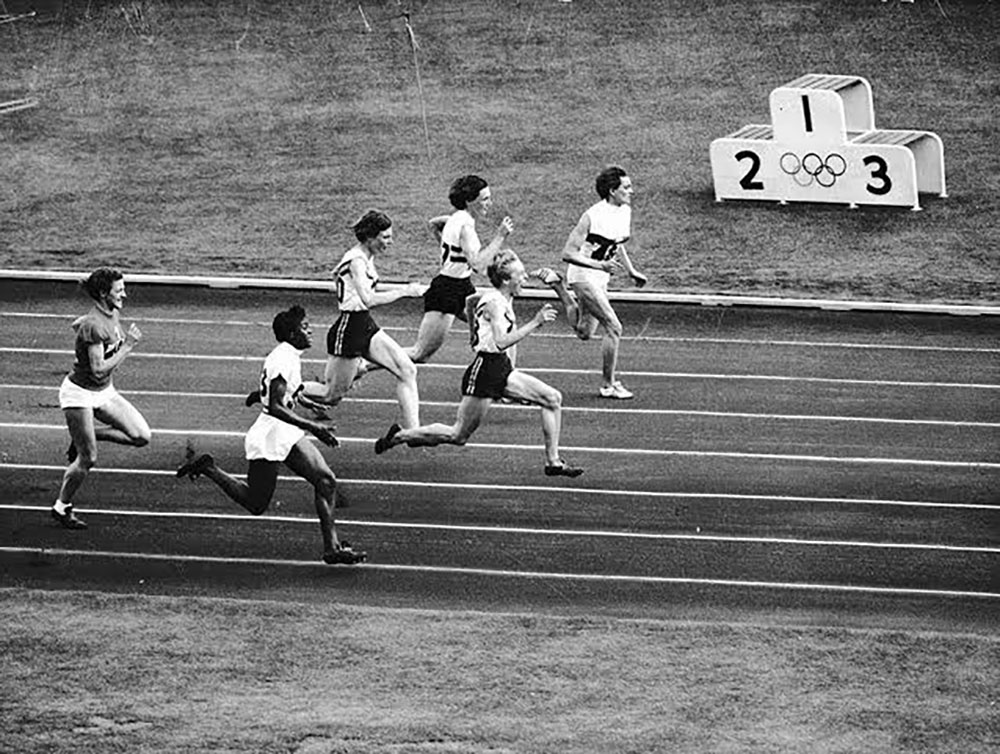
Despite focusing on marathon races during the year, Hassan left the World Championships in Budapest with a silver in women’s 5000m. Now, it was time for her to take on the triple realized by Emil Zatopek 72 years ago in Helsinki, with gold medals in 5000, 10,000 and marathon races.
Hassan began her quest in Paris with 5000 metres, where in the final she could not break the Kenyan train, but still managed to win bronze behind Beatrice Chebet and Faith Kipyegon. In 10,000 metres final, she got the better of the Kenyan group, but it was Nadia Battocletti who pulled off a surprise with a silver medal. While Chebet became the second woman to complete a 5000-10,000 double at the Olympics after Hassan three years earlier, the Dutch runner once again won bronze.
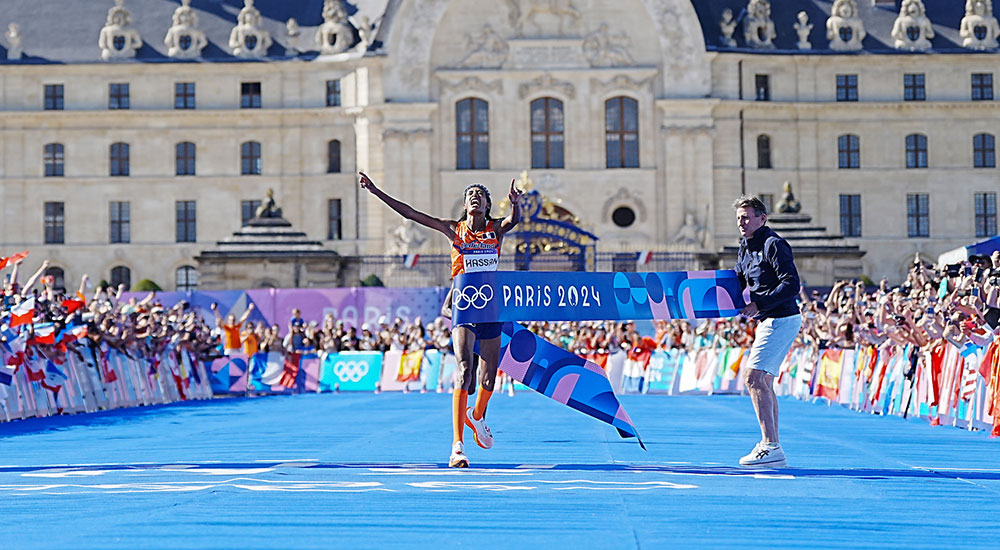
It was time for the marathon. A mere 35 hours after the women’s 10,000 meters final, Sifan Hassan was set to complete her 42.195 kilometre route to glory on the streets of Paris. Hassan, Tigist Assefa, Helen Obiri, Sharon Lokedi and Amane Beriso Shankule were the frontrunners for the better part of the race, but when it came to the final curve, the gold was up for grabs only for Hassan and Assefa. A shoulder-to-shoulder run to the finish saw Hassan arise victorious in 2:22:55, by a margin of only three seconds which marked the closest ever women’s marathon finish in Olympic history.
Sifan Hassan did not only become the first athlete to stand on 5000m, 10,000m, and marathon podiums at the same Olympic Games since Emil Zatopek in 1952, she is now the sole athlete to have Olympic medals in 1500m, 5000m, 10,000m, and marathon races in their collection.
Hassan proved to be resilient to brave any challenge that may come her way for the umpteenth time. With her massive trail in Paris, she now holds a distinct place in the history of distance running. Whatever she decides to take on next, it will surely make the sport all the more exciting.