By Alp ULAGAY - London
The past five years have ushered in a remarkable transformation in road running. Marathon records have fallen at unprecedented speed, culminating just weeks ago in London, where Kenya’s Sebastian Sawe became the first athlete to break the two‑hour barrier in an official race. At the same time, mass participation in major marathons continues to surge, with hundreds of thousands of amateur runners chasing their own breakthroughs.
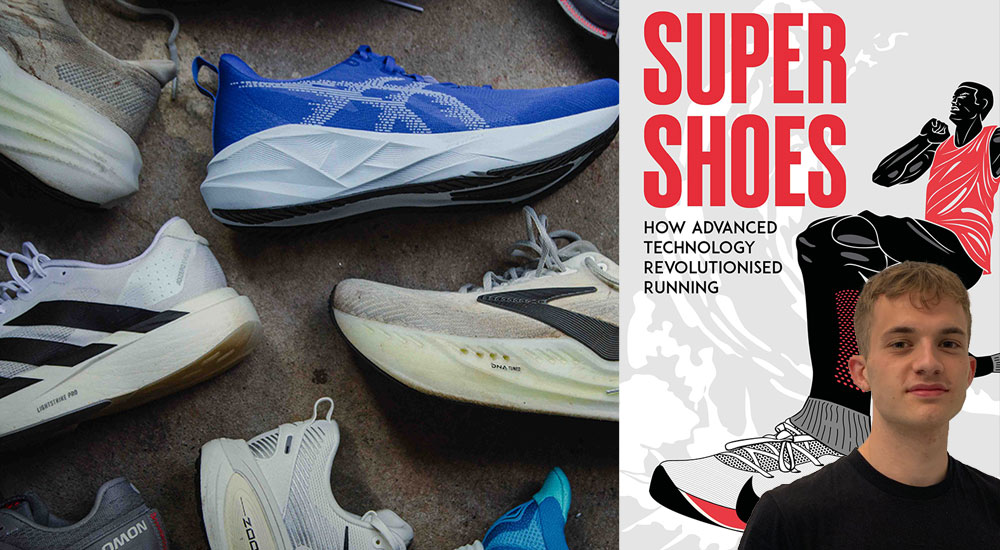
To understand what’s driving this new era, from technological leaps like super shoes to the changing physiology and training of elite athletes, I spoke with British sports journalist Liam Tharme, who investigates in his recent book ‘Super Shoes’ how the marathon has been reinvented in the last decade…
First and foremost, there had been a running and marathon boom in 1970s and 1980s, particularly in the United States. Is there a new marathon boom going on in terms of participation and performance right now?
- Yeah, I’d definitely say that off the back of London Marathon last month. At the end of April, they've just announced the entries for the ballot this year. For the lottery, we've had what they're saying is again a world record, something like 1.3 million people, which is crazy. It's a race that holds 60,000 people total. They're talking about doing two days of it to get more people in. But I think it works out to something like 2% of the UK adult population that have applied. Everyone in England and Britain wants to run London. You can also look at the qualifying times for Boston Marathon. They keep coming down because more and better people are running and getting quicker. I know New York and London keep going back and forth on trying to set records for how many people complete their marathon. So definitely, United States lead the way in this a lot. Europe is probably catching up a bit.
Let's get back to London Marathon. Were you really surprised to see Sabastian Sawe becoming the first man to break two hours barrier over here? Did you really see this coming?
- Not quite like this, no. He's run so well consistently in his previous marathons. He's run 2 hours, 2 minutes on repeat. He ran in really hot conditions in Berlin last September. You think “if you can run that in bad and warm conditions, what might you do in good conditions?” Then obviously to have two guys in the same race doing it, quite incredible.
How much of this performance is up to the new shoes? Was it just the shoes or anything else like the training regime, etc?
- I think it's all of it. Shoes are a part. The data is there; they improve performance. These shoes are even better than the Pro Evo 2s, which were very good shoes that Sawe won marathons in before. But in terms of the data, they're probably a couple of percent better than any shoe we've kind of seen before. They're even lighter. So they definitely help. They've said they've done so much testing with him at his training camp, also at the adidas Lab in Germany. They know what he needs and they know how to make a running shoe for him. But there's other elements as well. So the conditions were good in London. It was sunny, but it wasn't too warm. There was a bit of a tailwind as well towards the back end of the race, which is always helpful. There's big credit to the pacers as well. So they were bang on pace, 60 minutes and 30 seconds at halfway, which is planned. And having Yomif Kejelcha run with him… Sawe wasn't actually trying to break 2 hours deliberately. He's trying to win the race! Which is why at kind of 30 kilometres, he goes, “I'm going to leave Kiplimo. I'm going to run away from him.” And Kejelcha was a surprise package. This is his first marathon. And when they're there at the end together, Sawe just keeps going getting faster because he's trying to win. And then he ends up running it without even intending to run kind of sub 2 hours.
Can you please sum up the improvement of super shoes for the past 10, even 20 years. Where do you see the turning point in improving the footwear technology in the past 10 years?
- I guess it was happening in kind of smaller bits and pieces in kind of the early 2000s. You can go back to kind of the 1990s and like Fila were trying carbon plated shoes. Other brands have tried it. In the 2000s, 2010s, I can remember running in a really super thin kind of stick as a phone, racing flats because the materials weren't good enough to offer the propulsion we see now. So they said, “okay, shoes are going to add weight, they're going to slow people down if they're too big and chunky, let's make them kind of smaller and thin.” Then Adidas in kind of the 2010s were the first to really improve a foam, get a good modern kind of what we see now: That boost foams, which is the foam they have now in this Pro Evo 3. It's come on a long way from that. But it was the genesis of it and what they've come to now. In the book that I've written, there's a chapter on kind of the foam being the thing that matters the most. Because people see the carbon plate and they just see that and think, “oh, that's the difference making.” But everyone that I spoke to from researchers, engineers, people that test this stuff, they don't manufacture it, companies manufacture it. But they work with it, they understand it on like a molecular scientific level. They say that it's able to give back so much energy now, but t's also so soft, so you can compress it and squeeze it down so much, and that gives you more energy return.
Where are we in terms of technological war between the brands? Adidas had lost the battle back in 2019, but did they really win the war this time?
- I think so. I mean, to have two guys, in the same shoe on the same day, breaking as well as Tigst Assefa in the women's race, so to have, two world records on one day, they absolutely have that will stand of fervour in time. I'm a huge fan of Eliud Kipchoge. I think anyone in the marathon world appreciates what he achieved, what he did for the sport. And that one hour 59 minutes that he ran in Vienna was the first person to ever do that. But we also all accepted, “this is not a typical standard marathon. This is being set up for him to run one hour 59 minutes. That was the sole intention of that race. He was the only person running in it with pacemakers, hydration, the course, everything was so meticulously kind of organised. So adidas are definitely won in that sense, which we didn't think would happen for a long time. We thought it would be Nike. Had Kelvin Kiptum not really tragically passed away a few years ago, he was the leading contender for a long time. This could have easily been Nike.
ATHLETES ON LEVEL
Every time a big innovation comes up in sport, there has been a backlash in the past. Those fast swimsuits back in Beijing Olympics in 2008, they were banned the following year. And even leaders in sports and athletes often feel concerned about something new. Should we be concerned because of these super shoes?
- I don't think so. The tricky part now is it's a bit too late to go back. It's been nine years now since breaking two in the Vapour Fly. This summer will be 10 years since the Rio Olympics when the super shoes were first worn, and even then, that wasn't known until afterwards. The good thing now is that other brands have caught up. In fact, why we're now seeing there was a spike when Nike had the advantage for a few years when they released the Vapour Fly and the Alpha Fly. Now the other brands have caught up, made Adidas, Puma, that Nike do not have the best super shoe. I think that is at least more fair because obviously runners have to race in the shoes of their sponsor brand.
In the book, the Singaporean athlete I spoke to, he ran for Under Armour, he ran for ASICS, and he ran for them when they didn't have a super shoe. He just had to run in racing flats because that's what all he was allowed to kind of run in. What athletics were going to change things, it would have had to be kind of 2017 and 2018 when Nike first had this thing. I don't think they could have foreseen the impacts and the changes that it would have had. That was really hard to know at the time. Interestingly enough, the one area they have limited it a bit is with track spikes or with middle and long-distance track spikes. They've been slowly bringing down the what's called the stack height, obviously sandwich foam you can have in the shoe by a few millimetres. We've seen a bit of a boom in track races, but track races don't always tend to be run as much as time trials and people setting out to break records. So it's not quite the same as the marathon where obviously over 2 hours, there's way more minutes you can get in on the track.
Finally, I'd like to ask about your prediction for the next 10 years. Firstly, in terms of innovation, would there be an innovation in the next 10 years?
- The innovation is really hard to know. Obviously, that will be guided by the rules. So why don't let these change things? The real success will come from what kind of the researchers have told me is currently, they can put any of us in running shoes on a treadmill. They can analyse our gait, they can analyse our breathing, and they can work out which ones we run more efficiently in, which ones are better for us. What they can't yet do is kind of get into your muscles or get into the body and see why you are running better or worse than that. If they can figure something out with that in terms of scanning the body or scanning the muscles and saying, “You might run better in this shoe or another shoe, but we don't quite yet know why.” And if we can get to the point where shoes can then be tailored, basically like a suit, saying, “I hope you need this foam that Nike use, you want this upper on an adidas shoe or all these different parts or this specific shoe.” I think that will change the game again without even innovating anything new.
Secondly, do you predict an improvement in terms of times in road races, marathon mainly?
- In terms of time, a woman's sub-4 minute mile is an inevitability, which will be fantastic. We had Faith Kipyegon who was the first to have the go at that. I don't think she'll be the one that breaks it. She's one of the greatest ever. But she's a bit more endurance than that. I think there's a few very good 800-meter runners that will probably have a go at that at some point. I'd love to see a sub 2:10 women's marathon again. That will probably be in the next couple of years and by a clean athlete would be really nice. Obviously, there's still an ongoing case against Ruth Chepngetich. There's obviously the potential that while that record stands currently, that might well be an old in the future. We'll have to wait and see. For the men, now that Sub 2-hour has got it, it's hard to know what the next barrier is. Obviously, 1:58 then becomes a question and a reality, and I realise that Sawe is as close to 1:58 as he is, 2 hours with the time that he ran. You don't start looking at maybe some of the road distances and saying, how quick might you go over to kind of 10K, 5K? Obviously thinking about to Kiplimo's half marathon, he ran 56 minutes in Barcelona and then it wasn't ratified because of him being too close to the lead car. If the men's half marathon starts getting down to kind of 55 minutes, that is a possibility and just absolutely mental.
> This interview was originally published in the Dünya newspaper (Turkey) on May 15, 2026.