By Yavuz YAVUZ
From Peter O’Connor and his fellow Irish rebels of the 1906 Intercalated Games to the Black Power salute of John Carlos and Tommie Smith at the men’s 200 metres podium of the 1968 Summer Olympics in Mexico City, athletes using the sports events as a platform for political expression is not an unfamiliar phenomenon in track and field. Some athletes have taken it a step further and took the literal lectern during or after their professional careers.
The following is a collection of some of the medallist-turned-politicians. While it is practically impossible to make generalizations out of this brief collection, it is possible to trace certain patterns in the realm of athletics, such as the lower rate of woman athletes to take up ministerial or administrative roles or the revolutionary athletes of the 1960s as a reflection of the politically active atmosphere of the time. Here is a compilation of the medallist athletes who took up active roles in institutional politics.
ADMINISTRATORS
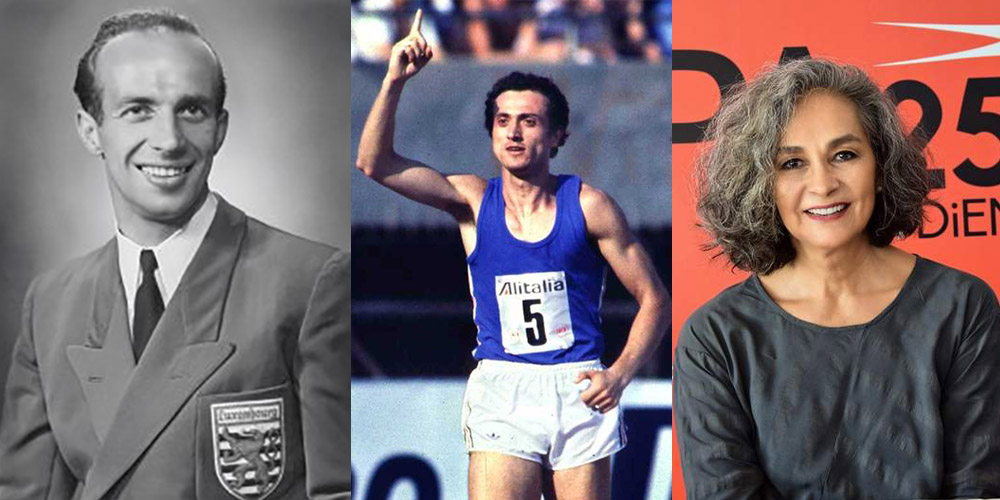
Some of the well-known medallists went on to taking up administrative posts such as cabinet members or mayors. Josy Barthel, holds a distinct place in the history of Luxembourg in this regard. When the country’s mere Olympic gold medallist stood at the top of the podium at the men’s 1500 metres event at the 1952 Summer Olympics, the Games were so unprepared that a common tune instead of the national anthem was played during the ceremony. Athletics, however, was not his only passion. Barthel was also a devout environmentalist, and he took up a cabinet post in 1977 as the government commissioner for water protection, a seat he occupied for more than seven years.
Witold Banka, a member of the bronze medal-winning Polish team of men’s 4x400 metres race at the 2007 World Championships was also a member of the government in his country. The incumbent World Anti-Doping Agency (WADA) president was the Minister of Sport and tourism from 2015 to 2019 for the right-wing populist Law and Justice party of Poland. Another athlete-turned minister was the silver medallist of the men’s 400 metres race at the 1964 Summer Olympics in Tokyo, Wendell Mottley, who became the Minister of Finance of Trinidad and Tobago in 1991.
There is also a prime minister among the ranks of former medallist track and field athletes. Long jumper Lester Bird, a bronze medallist at the 1959 Pan American Games, became the second premier of Antigua and Barbuda in 1994. Marred by corruption allegations and a succession crisis involving his brother Vere Bird Jr., who came under fire for an arms smuggling scandal, he succeeded his father, Sir Vere Bird as the leader of the Antiguan Labour Party (ALP) and the Prime Minister. He held the post until 2004, when the ALP was defeated by the opposition, United Progressive Party (UPP).
Another name to be mentioned here can be Ron Clarke, one of the most prolific record-breakers in track and field history, who went on to lead the city of Gold Coast in Australia as the mayor. The bronze medallist of the men’s 10.000 metres race at the 1964 Summer Olympics in Tokyo, credited for 17 world records during his career a number matching the tally of Finland’s Paavo Nurmi and sitting one record shy of Emil Zatopek’s overall number. The Olympic torchbearer of the 1956 Melbourne Games took up the baton in the municipal race for the mayor of Gold Coast in 2004. Running as an independent, he defeated the incumbent mayor, Gary Baildon. He remained as the mayor until 2012 when he decided to run for a legislative seat for Broadwater in the Queensland state elections of 2012. Clarke managed to garner only %4.6 of the votes and came in fourth.
LEGISLATORS
A number of athletes went on to write laws after writing history in athletics. For instance, legendary hammer thrower Jüri Tamm, who was the bronze medallist at the 1980 and 1988 Summer Olympics and world silver medallist in 1987 for the Soviet Union, was elected to the Estonian parliament three consecutive times from 1999 to 2011. Another example is Olha Saladukha, the Ukrainian triple jump world champion in Daegu in 2011 and the Olympic bronze medallist in London 2012. She was elected to the Ukrainian parliament in 2019 from the ruling Servant of the People list. Ruth Fuchs, who competed for East Germany and became a gold medallist javelin thrower in two consecutive Olympics (1972 Munich & 1976 Montréal), was also elected to the parliament after the unification, as a member of the Party of Democratic Socialism (today, Die Linke).
India’s two-time Asian champion in 800 and 1500 metres at the 1998 Asian Games, Jyotirmoyee Sikdar was also a member of parliament, having been elected from the Communist Party of India - Marxist. Sikdar was elected to the parliament from Krishnanagar Lok Sabha in 2004 but lost the race for re-election in 2009. After her estrangement from politics following the defeat, she pledged support for the centre-left All India Trinamool Congress Party, however, she became a member of right-wing Bharatiya Janata Party, the party of India’s controversial prime minister Narendra Modi who came under fire most recently for his government’s handling of the COVID-19 pandemic and a highly contested agricultural bill.
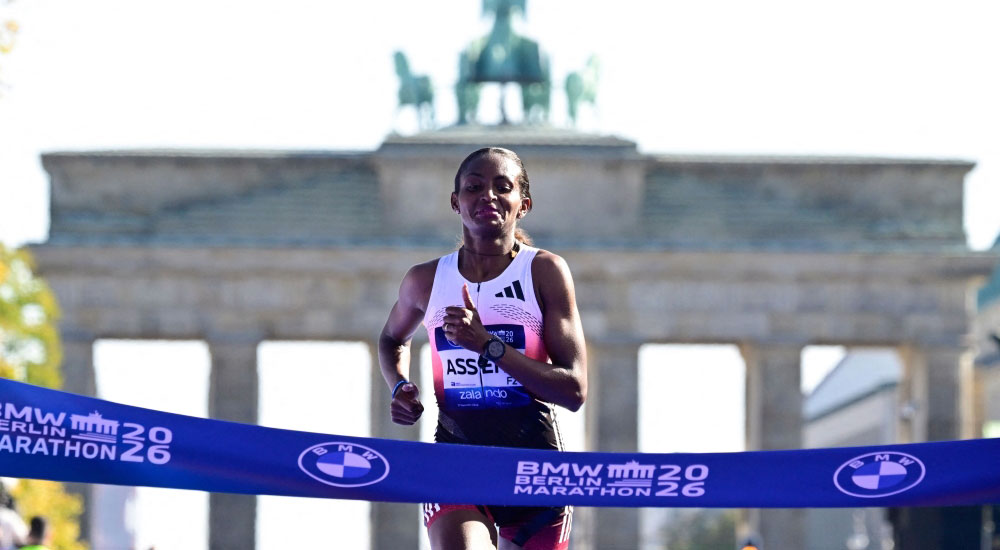
There are also those who took up seats at the European Parliament, the legislative branch of the European Union. Sari Essayah, for example, the former world (1993) and European (1994) champion race walker, went on to become a conservative politician and was elected to the European Parliament in 2009. She is still a member of the Finnish parliament and she is the head of the Christian Democrat party of Finland.
Pietro Mennea, one of Italy’s most famous sprinters was also a member of the European Parliament, having been elected from the list of The Democrats in 1999. Three-time European champion and Olympic gold medallist at the men’s 200 metres at the 1980 Olympic Games in Moscow, he had admitted to using human growth hormone in 1988, a performance enhancing substance which was not banned by the IAAF at the time. During his tenure in the European Parliament, he lobbied for independent doping testing authorities, which was later adopted. Mennea was also a vocal critic of the prospect of Rome’s biding for the 2020 Summer Olympics, arguing that “the real priorities of the country lie elsewhere”, in the face of the economic crisis.
REVOLUTIONARIES
Last but certainly not least, there are those for whom the red flag is raised for their politics and not for a code violation. Numerous athletes were involved in left-wing politics, and among them were a number of internationally renowned ones. Mehmet Ali Aybar of Turkey, for instance, who won seven medals at the Balkan Athletics, broke 14 national records and represented Turkey at the 1928 Olympics in Amsterdam, was a prominent socialist politician.
During the 1960s which was marked by worker and student protests, he led the Workers’ Party of Turkey to the parliament in the general elections of 1965, making the party the first socialist party to gain legislative seats. He was also a journalist and was imprisoned in Turkey several times due to the leftist periodicals he published. As a practitioner of law, he became a member of the International War Crimes Tribunal, founded by Bertrand Russell in 1966 and took part in the Tribunal’s investigations into the war crimes committed by the USA during the Vietnam War.
Another champion of the Balkan Athletics Championships, triple jumper, long jumper and sprinter Grigoris Lambrakis of Greece, who took part in the 1936 Summer Olympics in men’s long jump and triple jump events, was also a well-known left-wing politician. During the occupation of the Axis forces in the Second World War, he took active part in the Greek resistance. He organized sports events with the Union of Greek Athletes and used the revenues for funding the public food banks.
After the war, he was elected to the Hellenic Parliament as an MP of the United Democratic Left (EDA), the only legal left-wing party in Greece from the end of the Civil War in 1949 to the end of the rule of the military junta in 1974. During the early years of the 1960s, he was active in the pacifist movement, and he was arrested several times in anti-war protests. He organized the First Pacifist Rally in 1963. Shortly after, he was assassinated by two far-right militants. His death sparked a protest of nearly 500.000 people in Athens.
Sofia Sakorafa is another Greek athlete who later became a left-wing politician. A gold medallist at the 1979 Mediterranean Games and a bronze medallist at the 1982 European Championships in Athens, she was a renowned javelin thrower. After serving at the City Council of Athens, she was elected to the Hellenic Parliament as a PASOK MP three consecutive times. In 2004, at the age of 47, she became a Palestinian citizen and applied to represent Palestine at the 2004 Summer Olympic in Athens, but her application was rejected by the IAAF.
In 2012, she was elected as an MP of the SYRIZA party, which later came to power in the left-wing anti-austerity wave in Europe following the financial meltdown of 2008. However, she resigned from SYRIZA in 2015, in protest over the party’s approval of the austerity measures imposed by the European Union, European Central Bank and the International Monetary Fund, despite a referendum where the Greek people overwhelmingly rejected the draconian cuts in public funds as part of a bailout package.
Sakorafa is now an MP for the MeRa25 party formed by a breakaway group from SYRIZA and she also serves as the deputy speaker of the Hellenic Parliament. Moreover, Sakorafa became the head of the Greek Amateur Athletics Association, the oldest sports federation of Greece. She is the first woman to hold this position.