By Şevket F. ERBAY
According to authorities, Ethiopian marathoner Abebe Bikila’s astonishing feat in Rome Olympics is rightfully considered the inauguration of African athletics in the international scene. Competed under the flag of the long-lasting Ethiopian Empire, Bikila has turned into an iconic figure after his famous barefoot victory at the finish in Arc of Constantine, by 25 seconds ahead of the Moroccan runner Rhadi ben Abdesselam. He broke the unofficial marathon world record that day by clocking 2:15:16.2. Historically, he did not only become the first black African Olympic gold medallist, but also the other top two finishers were from Africa in the single most prominent contest in human history.
None the less, athletics in the African continent did not have a proper institution until 1973. Some French-speaking countries have joined together in competition in 1960 (Jeux de l’Amitié) which led to the formation of African Games in five years. Then, Brazzaville hosted the first All-Africa Games in July 1965, nearly 40 years after the former IOC President Pierre de Coubertin proposed it for the continent. Yet, since the colonizing powers have impeded the Games for decades, it was only accurate that they were first held during the Pan African renaissance of the 1960s.
The inaugural games were conducted in a heavily secured atmosphere because of revolutionary threats on the regime, but second edition was nothing like it. Mali’s capital Bamako was originally awarded the 1969 All-Africa Games, which were cancelled due to the military coup organized against keen Pan Africanist leader, Modibo Keita, who was overthrown. After their cancellation, Nigeria’s Lagos took the baton for the 1971 Games, which was also postponed a couple of years in order to give time for healing from the destruction of the Nigerian Civil War.
FORMATION FOR UNITY
Finally, during the first month of 1973, Nigerian then-capital Lagos hosted the second All-African Games with the participation of 37 countries, mostly newly established republics. There was a simply historic atmosphere by the attendance of heroic figures such as Abebe Bikila, Muhammad Ali and Pele.
In the very same place in Lagos, Senegalese prominent sports official Lamine Diack had concluded his ambition to form a governing body for African Athletics as the African Amateur Athletics Confederation (AAAC) was founded there. Diack, former long jumper and future IAAF President, helmed the continental athletics for a further 30 years, then handed baton to the current chief, Hamad Kalkaba Malboum of Cameroon, who has been in charge since then.
Confederation of African Athletics (later changed its abbreviation to CAA) established an office at the Senegalese capital Dakar. The city also inaugurated the first continental athletics championships in 1979. Despite the cancellation of the 1981 edition in Nigeria after an athlete was killed in a domestic violence, the African Championships had been contested relatively regularly until today. Latest edition in Mauritius saw 45 of the 54 CAA member nations – highest ever - represented on the field.
Alongside the main championships, CAA also divided the continent to five sub-regions for regional contests by ease development, which mainly started in the ‘90s. With this, some early athletics competitions in Africa such as Maghreb Championships (started in 1967) or Eastern Region Championships (started in 1950s) have transformed into zonal events.
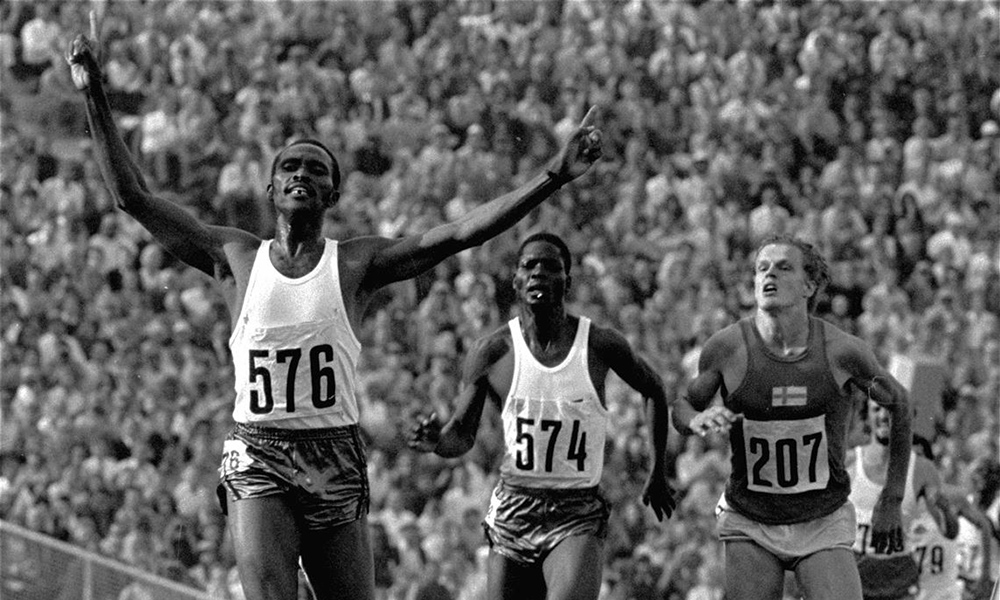
As from 1968 Mexico City Games, Kenya has started to emerge as the leading power in African athletics, and later they became the dominant force in longer distances and road races. Kenyans won eight athletics medals (three of them gold) at the 1968 Olympics and placed second between two rival nations, United States and Soviet Union. Four years later, Ugandan John Akii-Bua broke his mythical world record (47.82) in Munich’s Olympic Stadium, a feat that amazed fans all over the world.
Then, African presence at the Olympics were marred by boycotts. When the World finally reacted against South Africa’s notorious apartheid regime, the African countries were simply affected by the spirit of Cold War & post-colonial sentiments of the 1970s. African nations boycotted the Montreal Games after IOC’s refusal to ban New Zealand over their 1976 rugby tour in politically isolated South Africa, which was followed by other political actions at the subsequent 1980 and 1984 Games as well. This meant that the ideal African representation at the Games were interrupted until 1988 Seoul, the last Olympics before the collapse of the Eastern Bloc. However, even at the Seoul 1988 Africa was not fully represented because Ethiopia did not send their athletes to Korea.
TIMES OF CHANGE
Starting from 1992 Barcelona, African athletes have played a magical role at the Olympic stage. They brought home tens of Olympics medals until Tokyo 2020 Olympics as simultaneous Kenya-Ethiopia dominance in recent years fuelled these numbers. Just mind the comparison: Two Eastern African neighbours have produced 27 athletics gold medallists combined in the last four games, more than what the entire continent secured between the years 1960 and 1996.
As we look over to the modern era, great Haile Gebrselassie was hailed as the ‘new Bikila’ in the ‘90s, then Kenenisa Bekele carried the flag until today for the Ethiopians, as well as their female stars who were also brilliant at the Olympic scene. Kenyans became proud with Eliud Kipchoge, perhaps the greatest marathoner of all time as Morocco presented their own ground breakers such as Nawal El Mutawakel and Said Aouita, followed by Hicham El Guerrouj and Soufiane El Bakkali, who ended 30+ years of Kenyan reign in steeplechase in Tokyo. While Algeria’s world record holder miler Noureddine Morceli opened the way for fellow Algerians, Nigeria emerged as a sprinting power with a help of a highly skilled generation who were well trained in the United States’ collegiate system. Additionally, another African power, South Africa, who once had a long-lasting lay-off from the Games, celebrated one of the proudest sporting moments in their history when Wayde Van Niekerk stopped the clocked at 43.03 in the 400 metres final at Rio 2016 Games.
With all these historic achievements and many more, Africa has just become an essential part of global athletics story without a doubt, despite coming very late and from a disadvantageous point. Nobody would be surprised if one day in the next 50 years they get the lead on the medal table.
OLYMPIC MEDALS FOR AFRICA
1960 Rome: 1-1-0 (ETH, MAR)
1964 Tokyo: 1-1-0 (ETH, TUN)
1968 Mexico City: 5-5-2 (KEN, ETH, TUN)
1972 Munich: 3-3-4 (KEN, UGA, ETH, TUN)
1976 Montreal: Widely boycotted.
1980 Moscow: 2-2-2 (ETH, TAN) – Partly boycotted.
1984 Los Angeles: 3-1-2 (MAR, KEN, CIV, NGR) – Partly boycotted.
1988 Seoul: 5-3-3 (KEN, SEN, MAR, DJI)
1992 Barcelona: 5-9-5 (KEN, MAR, ETH, ALG, NAM, NGR, RSA)
1996 Atlanta: 7-9-10 (KEN, ETH, NGR, BDI, ALG, NAM, MAR, ZAM, MOZ, UGA)
2000 Sydney: 9-8-12 (ETH, KEN, ALG, NGR, MOZ, MAR, RSA)
2004 Athens: 6-10-7 (ETH, MAR, KEN, CMR, RSA, NGR, ERI)
2008 Beijing: 11-11-8 (KEN, ETH, CMR, NGR, MAR, RSA, SUD)
2012 London: 9-6-11 (ETH, KEN, ALG, RSA, TUN, UGA, MAR)
2016 Rio: 9-13-6 (KEN, ETH, ALG, BDI)
2020 Tokyo: 8-7-8 (KEN, ETH, UGA, MAR, NAM, BOT, BUR, NGR)
‘FIRSTS’ FOR AFRICAN ATHLETICS
Olympic medal: Reggie Walker, RSA (1908 in 100m)
Olympic medal (by a black African): Abebe Bikila, ETH (1960 in Marathon)
Olympic medal (by an African woman): Nawal El Mutawakel, MAR (1984 in 400H)
Olympic title defence: Abebe Bikila in 1960-64 Marathon
Olympic relay gold: Kenya (1972 in Men’s 4x400m)
World medal: Ajayi Agbebaku, NGR (TJ bronze in 1983)
World title: Paul Kipkoech, KEN, (10,000m gold in 1987)
Official world record holder: Kip Keino, KEN (5000m in 30.11.1965)
CHAMPIONSHIP STARTS
1960: French Community Games (ends in 1963)
1965: African Games
1967: Maghreb Championships (ends in 1990)
1975: Central African Championships
1977: West African Games (one-off event)
1979: African Athletics Championships
1985: African Cross-Country Championships (Lay-off until 2011)
1987: Southern Region African Championships
1994: African Junior (now U20) Athletics Championships
1995: West African Championships
1995: East African Championships
1999: African Combined Events Championships
2003: Afro-Asian Games (one-off event)
2010: African Youth Games
2013: African U18 Championships