By Yavuz Yavuz
Japan National Stadium in Tokyo was the stage of some great performances, such as the world records in 400m hurdles during the Olympic Games four years ago. All of them, however, took place before empty stands due to the pandemic restrictions imposed by the COVID-19. 2025 World Athletics Championships is set to be the first major spectator event for track and field to be held in the venue. Japanese team targets building on the host’s momentum, but the current form of the athletes signal the need for a leap of faith to stage a memorable showing before the home crowd.
FIELD HOPEFULS
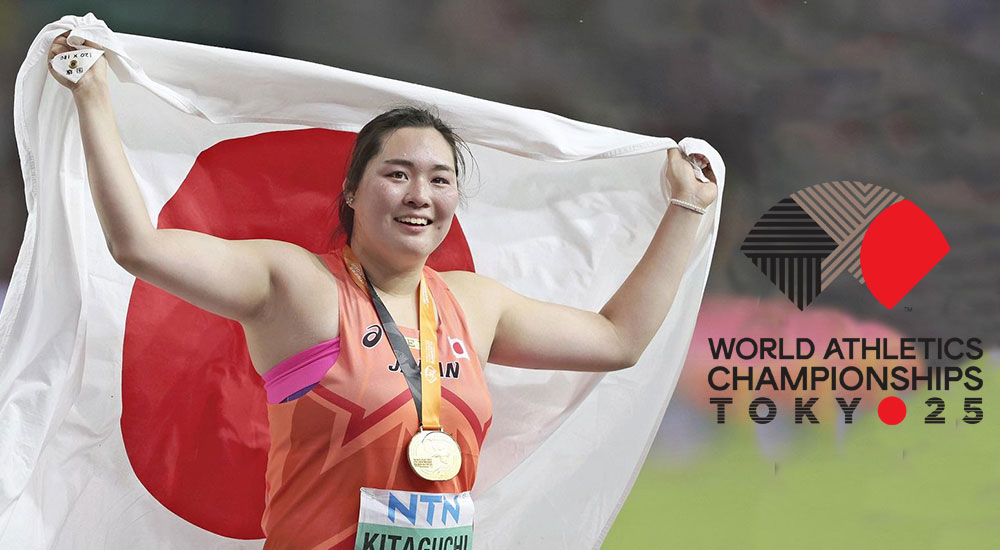
Japan won a single medal at the 2024 Summer Olympics in Paris, which was the country’s first Olympic gold in 20 years, courtesy of star javelin thrower Haruka Kitaguchi. Kitaguchi’s season best sits at 64.63 – the mark that catapulted her to first place at Bislett Games – which is only the sixth in this year’s ranking list. With Balkan stars Elina Tzengko of Greece and Serbia’s Adriana Vilagos coming full throttle to Tokyo, Kitaguchi’s bid for gold seems to be a steep and rocky road. Nevertheless, the home crowd will try to stimulate Kitaguchi for a podium place.
On the men’s side, Yuta Sakiyama produced a personal best of 87.16 metres which sits at fifth place in this season’s rankings. But with Julian Weber, motivated by the diamond title he won with 91.51 and the defending champion Neeraj Chopra as the favourites for the gold in Tokyo, the 29-year-old will have to go into contention with Olympic champion Arshad Nadeem, Curtis Thompson of the USA, and Brazil’s Luiz Mauricio da Silva who threw a South American record mark of 91.00 metres this year for a spot on the podium.
The other medal hope for Japan in field events is Yuto Seko, the Asian Indoor silver-medallist in men’s high jump who produced two lifetime bests of 2.25 and 2.33 metres this year, both on home soil. South Korea’s Sanghyeok Woo wants to clinch gold in the absence of Mutaz Essa Barshim, and with Gianmarco Tamberi, who is in questionable shape, doubtful for the Worlds. Hamish Kerr of New Zealand is also in contention for gold. If Seko can fend off Oleh Doroshchuk, who should not be written off despite not being able to transfer his form indoors to outdoor season, and Czechia’s Jan Stefela, who jumped a personal best of 2.33 this year, he can have a shot at the podium.
HURDLES TO BE CLEARED
Two hurdlers left significant marks on the track this season and produced national records for Japan. In men’s 3000m steeplechase, Ryuji Miura lowered his own Japanese record by more than six seconds to 8:03.43 this summer, which is the third best time of the world in 2025. But for a medal, he has to brave fierce competition. Soufiane El Bakkali is chasing a three-peat, Frederik Ruppert wants to bring Germany its first gold medal in the event in 34 years, and world U20 champion Edmund Serem looks to restore Kenyan hegemony.
In men’s 110m hurdles, Rachid Muratake dipped under 13 seconds for the first time in his career as well as in Japanese history by clocking 12.92. The mark is the second-best of 2025, sitting only behind 12.87 of Cordell Tinch, but the event has a loaded field.
IT’S A TEAM EFFORT
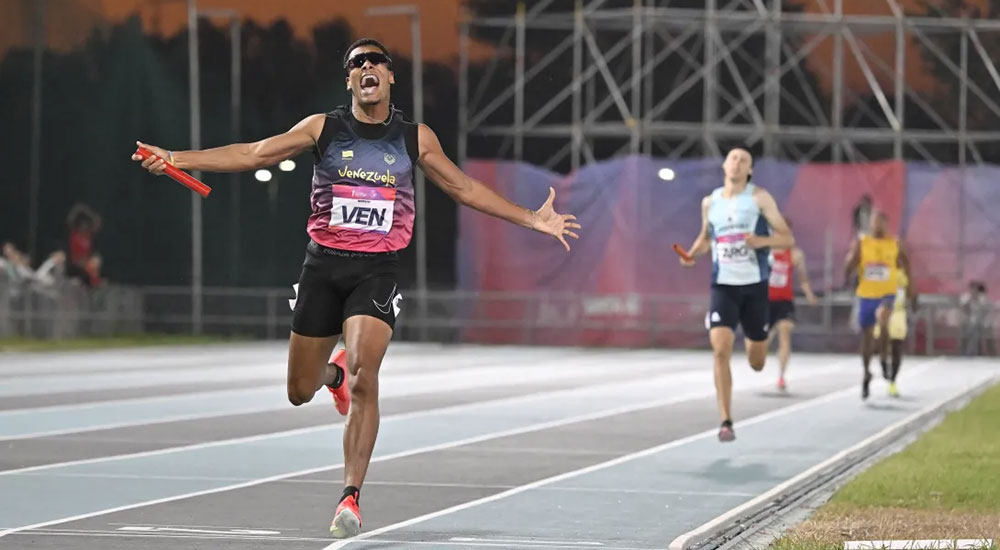
Japanese men’s relay teams laid a significant challenge last year at the Olympic Games in Paris and they will hope to carry it to their homeland. Abdul Hakim Sani Brown and Yoshihide Kiryū of the team that finished fifth at the Olympic final of men’s 4x100m last year in Paris are sure to return to take the baton and they will look to take on the world’s greatest relay nations for a spot on the podium.
In men’s 4x400m, Japan broke the Asian record in 2:58.33 last year in the Olympic final. Led by Yuki Joseph Nakajima, they will seek a medal before home crowd in this race as well.
WALK OF FAME
If there is one category of events the Japanese can be confident in succeeding, that would be the racewalks. In women’s 20 km racewalk, Nanako Fujii has the second best time in the world this season with 1:26:33 – also a Japanese record – and considering the best time belongs to Elvira Chepareva of Russia, she holds best season’s mark of the Worlds lineup. She will still have Olympic bronze medallist Jemima Montag, defending world champion Maria Perez, and China’s Li Ma to take on.
On the men’s side Japan has a very strong team, particularly in the 20km. Toshikazu Yamanishi is the world record holder in 1:16:10, and Satoshi Maruo has the second best time of the season behind him. Kento Yoshikawa is another racewalker who produced a PB this season. With Hayato Katsuki added to the mix in 35km race, Japanese men’s team is sure to leave a significant trace on the roads of Tokyo.
The last time a host country missed out on podium spots in the Worlds was in 2001 when Canada was left empty handed in Edmonton, and Japan will try to avoid this pitfall this year in Tokyo. Japanese athletes have a record to excel on home soil, as the Olympic Games in Tokyo four years ago saw the highest number of Top 8 finishes for the team in the post-Second World War era with a total of nine. But to win medals this year, the stakes they face are higher.
Japan is set to host the World Athletics Championships for the third time, and in the first two editions (Tokyo 1991 and Osaka 2007), they won a total of three medals – all in marathon races. In that sense, winning medals inside the stadium will be another challenge for the home team.