Written by Yavuz YAVUZ
The fifth Islamic Solidarity Games, due to be held in 2021 but was postponed a year due to the COVID-19 pandemic began in Konya, and there were five days of wind, heat and mayhem in the athletics event.
While the first days of the races witnessed a number of broken records and personal bests, they were overshadowed by the revelation that there was a technical failure in the cabling of Konya’s brand-new athletics track, which led to the recommendation that the track results of the first three days were not to be used for world rankings or registering records. Under the eclipse of this shocking news, Turkey topped the medal table, and a number of significant results were achieved. Here’s a lookback at the highlights of a turbulent athletics event of the Islamic Solidarity Games in Konya.
MEASUREMENT CONTROVERSY
The record-laden first days in Konya were marred by the detection of a technical failure in the cabling system of track measurements. While there were a number of Games records and national records broken in the first three days of the athletics event, the technical delegates of the race decided to issue a recommendation of removing the world rankings and record validities of the results of the first three days, when they discovered irregularities in the starting system that made it impossible to determine the full accuracy of the results.
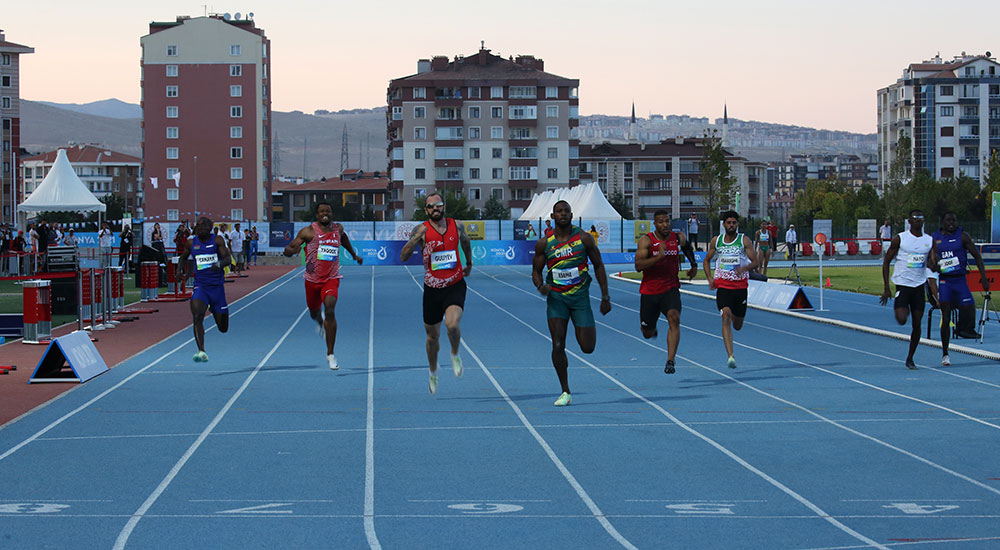
This cast a shadow on a number of important results, such as Emmanuel Eseme’s 20.16 in the heats of men’s 200m, breaking Cameroon’s 23-year-old national record set by Joseph Batangdon by 20.31. Turkey’s Şevval Ayaz 131.5 clocking in the 100m hurdles as a Games record also earned an asterisk on its side.
UNQUESTIONABLE DOMINANCE, DOUBTFUL SOLIDARITY
Turkey, having fielded an important part of its European Championships line-up, topped the athletics medal table of Islamic Solidarity Games for the first time (excluding 1980, which is not recognized as an edition of the Games), after coming in second in the previous two editions. With 13 gold medals (excluding one in para-athletics) and 29 medal in total (excluding four in para-athletics events), Turkey finished ahead of Bahrain, who fell short by five gold medals and 10 medals in total.
Several athletes who won gold at the Mediterranean Games in Oran this year also prevailed in the same disciplines in Konya. Ersu Şaşma Turkey’s star pole vaulter who broke the Games record by clearing the bar at 5.60, was one of them. Ekaterina Guliyev also repeated her gold medal performance in women’s 800m race. On the other hand, the Mediterranean Games champions for men’s 200m and 400m hurdles races, Ramil Guliyev and Yasmani Copello Escobar settled for silver in their respective races.
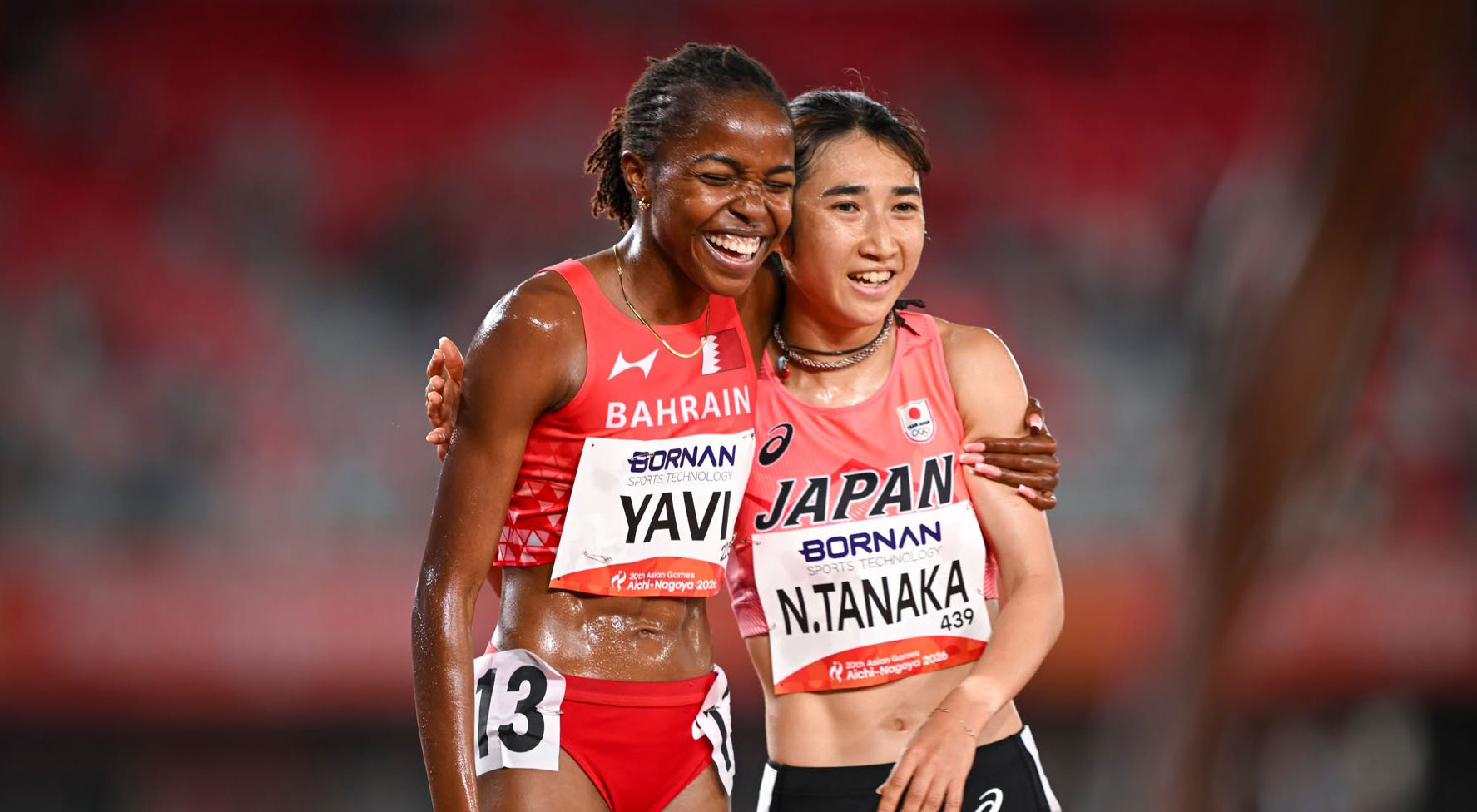
Yasemin Can was another Mediterranean Games champion who became the gold medallist in Konya as well by winning the women’s 5000m race. By fending off the threat posed by Bahrain’s Bontu Rebitu and Ruth Jebet, she also triumphed in women’s 10000m race, being the first athlete to achieve the double in the Games’ history.
Turkey’s women’s 4x100 relay team lowered the 11-year-old national record by 0.21 seconds to 44.49 to win bronze. At the same time, the men’s 4x100 relay team clocked 38.74 to win gold and break the Games record.
The golden duo of pole vaulting in Baku 2017, Buse Arıkazan and Demet Parlak shared the top step of the podium once more. However, while the shared medals were decided ahead of a countback five years ago, the two athletes’ dropping the race in Konya after failing their first attempts at 4.20 and before it all came down to countback, in order to add two gold medals to the tally at the same time, was a decision that stood on an slippery slope in ethical terms.
BAHRAIN, THE RELAY NATION
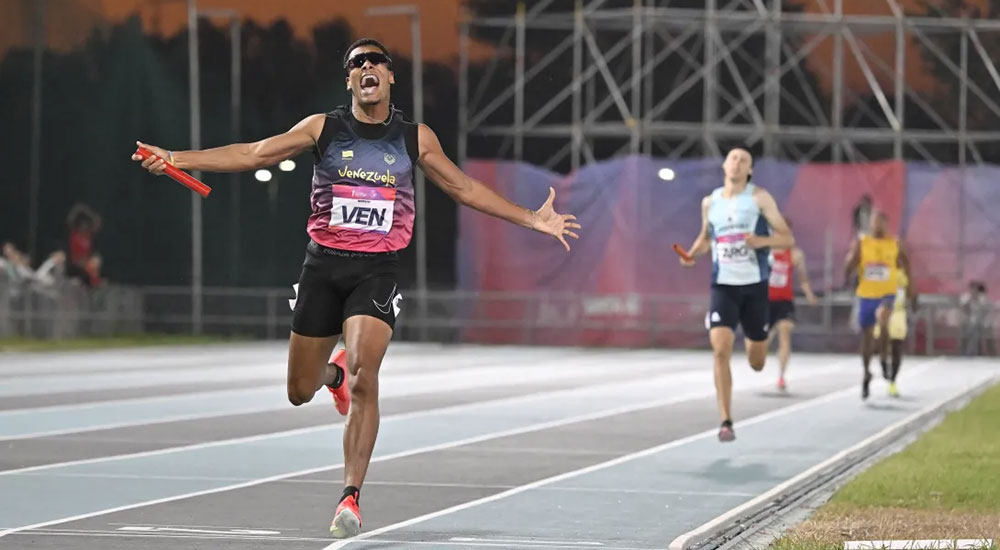
Bahrain was the only country to stand on the podium of all five relay races. In the mixed 4x400m relay race, included in the Games program for the first time, they won gold with the team of Ali Khamis Khamis, Zenab Mahamat, Musa Isah and Muna Mubarak. Mahamat and Mubarak also joined forces with Aminat Yusuf Jamal and the 100m gold medallist Edidiong Odiong to win the women’s 4x400 relay race. Bahraini men’s 4x400m relay team became bronze medallist after a chaotic race that resulted in the disqualification of three teams.
Bahrain’s 4x100 teams both finished second in their finals. The men’s team broke the national record by clocking 39.01 whereas the women’s team were the silver medallists behind The Gambia’s fantastic sprinters.
OTHER HIGHLIGHTS
Togo’s Naomi Akkosiwa Akakpo clocked 13.40 in the women’s 100m hurdles race to win silver, which was the country’s first ever athletics medal in the history of the Islamic Solidarity Games.
Arshad Nadeem, who won Pakistan its first Commonwealth Games athletics gold in 60 years a week ago in Birmingham, obliterated the Games record with a staggering 88.55 in men’s javelin throw.
Uzbekistan’s high jumper Safina Sadullayeva improved her personal best by one centimeter to 1.97 and broke the Games record. While her attempt at 2.00m in a quest to break the 38-year-old Uzbek national record of 1.98 was unsuccessful, she added to the four gold medals and eight medals in total of her country’s overall sum, which became their best showing in the Games’ history.
The Gambia won two gold medals at the Games and the name Gina Bass was written all over them. The African Games champion improved her silver from 2017 to gold in women’s 200m race and anchored The Gambia’s women’s 4x100 team to gold medal, where they broke the Games record by clocking 43.83, as well as improving the national record by more than one second.